24 Inch BBQ Skewers | Stainless Steel | Flat Blade Anti-Spin | Reusable | 8mm or 10mm Width
24 Inch BBQ Skewers | Stainless Steel | Flat Blade Anti-Spin | Reusable | 8mm or 10mm Width
Upload your label and get free shipping using the IHAVELABEL code on checkout
Couldn't load pickup availability
24 Inch Stainless Steel Skewers — Flat Blade, Two Widths, Reusable
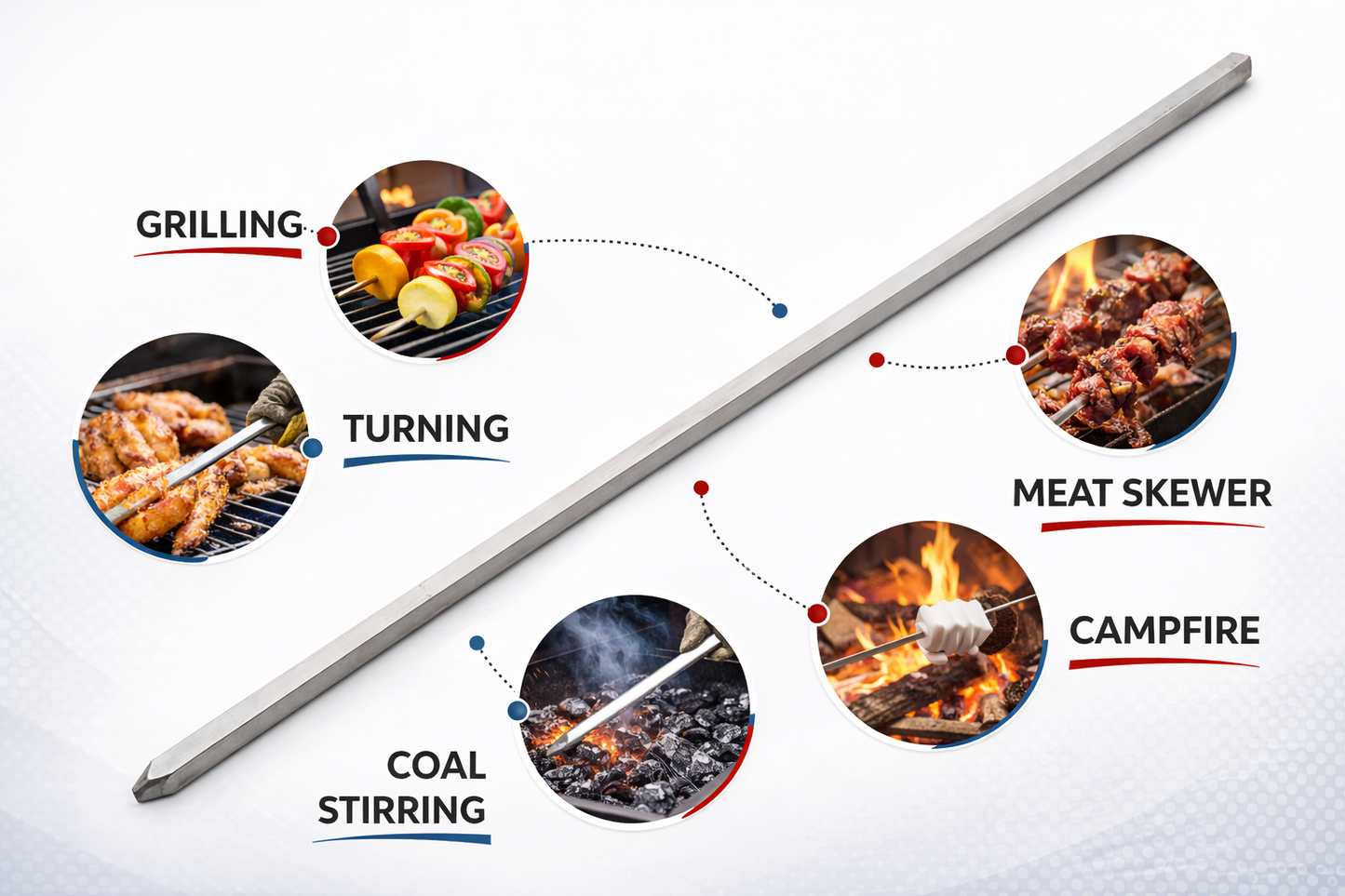
The one detail that separates a good BBQ skewer from a frustrating one is the blade profile. A round shaft lets food spin freely when the skewer turns — the outside of the skewer rotates but the food stays facing the same direction, which means it never gets an even cook unless you hold each piece individually. A flat blade grips the food and turns it with the skewer. That's the design used here on both the 8mm and 10mm widths. At 24 inches long, both versions give your hand proper clearance from the coals while still letting you load, turn, and reposition food with full control. Stainless steel throughout — no soaking before use, no burning tips, no rust between BBQ seasons.
8mm or 10mm — Which Width to Choose
8mm is the narrower option. It threads through smaller, softer pieces of food more easily — prawns, vegetable cubes, fish pieces, and smaller chicken strips all load onto an 8mm blade without splitting or tearing. The narrower profile also leaves less gap between food pieces on the skewer. For mixed vegetable skewers or seafood, the 8mm is the right choice.
10mm is the wider, heavier-duty option. The broader blade gives more surface contact with each food piece, which means denser cuts — chicken thigh chunks, lamb shoulder cubes, beef for shish, and kofta-style minced meat pressed around the blade — grip the skewer more firmly. When you turn the 10mm skewer, dense meat pieces move with it rather than lagging behind. The wider blade also holds its own weight better when heavily loaded, sitting flat on the grill rather than drooping if the food is particularly heavy.
If you cook both meat and vegetables regularly, it's worth having both widths — 8mm for the vegetable and seafood skewers, 10mm for the meat ones.
The Flat Blade — Why Round Shafts Are the Wrong Design for Skewers
A skewer's job is to hold food in place and let you control it during cooking. A round shaft fails at that job because there's no grip between the metal and the food — the food can spin around the shaft independently from the skewer. When you turn a round-shaft skewer to cook the other side, the food often stays in the same position, especially if one side is seared and sticking to the grill.
The flat blade has two flat surfaces and two edges. The edges bite into the food during threading and the flat surfaces resist rotation under load. When you turn the skewer, the food turns with it. That's what gives you an even cook on both sides without having to press each piece individually.
24 Inches — The Right Length for a Full-Size BBQ
Shorter skewers — anything under 18 inches — work on smaller BBQs but the handle gets uncomfortably close to the coals on a large charcoal grill, particularly when the fire is at full heat. At 24 inches, the handle extends well beyond the edge of the grill. You can turn food, lift and reposition skewers, and check doneness without leaning over the heat or needing a separate tool to manage the distance.
The full 24-inch length is also usable for food. On a shorter skewer, you lose some of the blade length to the section that sits on the grill edge — at 24 inches you have more of the blade available for food loading, which means more food per skewer and fewer skewers needed per cook.
Stainless Steel — No Preparation, No Maintenance, No Disposal
Bamboo skewers need soaking for at least 30 minutes before use to reduce the risk of tip charring. Even then, the tips still char and sometimes split through cooking — dropping food into the coals or breaking mid-session. They're single use, so a large pack runs out.
Stainless steel needs none of that. Take the skewers out, load the food directly, and cook. The steel doesn't burn at BBQ temperatures, doesn't split, and doesn't react with acidic marinades, lemon juice, or vinegar-based sauces during cooking. After use, the skewers cool down, rinse under the tap or go in the dishwasher, and go back in a drawer or hang from their looped handles. The same skewers work through multiple BBQ seasons without any degradation.
The Looped Handle
The loop at the handle end does two things. It gives a natural grip point for turning — the finger loops through the handle, which prevents the skewer from rolling in your hand during a turn. It also allows the skewers to hang from a hook for storage, which keeps them together and easy to find at the start of the next BBQ rather than loose at the back of a drawer.
What to Cook on Each Width
8mm skewers:
- Whole prawns threaded through the body — cook quickly and the narrower blade doesn't split the flesh
- Mixed vegetable skewers — peppers, mushrooms, courgette, cherry tomatoes, red onion
- Fish cubes — salmon and tuna hold together better on a narrower blade
- Halloumi and soft cheese — the 8mm threads through without crumbling
10mm skewers:
- Chicken thigh chunks — the wider blade grips the meat firmly and turns it cleanly
- Lamb shoulder cubed for shish — dense enough to need the wider blade for control
- Kofta — minced lamb or beef pressed around the flat blade and grilled whole
- Beef cubes for steak skewers — the 10mm holds larger, heavier pieces without them lagging when turned
Available in 8mm and 10mm width. Both 24 inches long. Stainless steel flat blade shaft. Looped handle. Rust-free, dishwasher safe, reusable. No soaking or pre-treatment needed. For charcoal BBQ, gas grill, and open fire cooking.