SKU:53093C
13 Inch Pin Hammer with Drop Forged Steel Head & Hardwood Handle | 325mm | For Pins, Tacks & Fine Joinery
13 Inch Pin Hammer with Drop Forged Steel Head & Hardwood Handle | 325mm | For Pins, Tacks & Fine Joinery
- Weight: 400g
- Size: 30x20x10cm
Currently 50 items are in stock!
Shipping: We Use Evri and Royal Mail Tracked 48 Services. Please do not send us Yodel and Relay Labels.
Upload your label and get free shipping using the IHAVELABEL code on checkout
Couldn't load pickup availability
The Precise Tool for Small Nails, Pins and Tacks
A standard hammer is the wrong tool for pin work. Not slightly wrong — genuinely wrong. The head is too heavy, the face is too wide, and the moment you try to start a small panel pin or a tack with a full-size hammer, you either bend it, miss it, or hit your fingers. None of those outcomes are useful when you're halfway through a cabinet build or trying to fit picture frame moulding without splitting the rebate.
A pin hammer is built around a completely different set of demands. Light head, narrow cross peen, smooth wooden handle — everything about it is shaped for close, careful work where accuracy matters more than force. This 13-inch version has a drop forged hardened steel head that stays sharp and true, and a smooth hardwood shaft that sits naturally in the hand at exactly the right length for the kind of work it's designed for.
The Cross Peen — Why It Changes How You Work
Most people who haven't used a cross peen hammer before look at it and assume the narrow wedge at the back is just decorative, or maybe for some specialist trade task they've never come across. It's neither. It solves a very specific, very common problem.
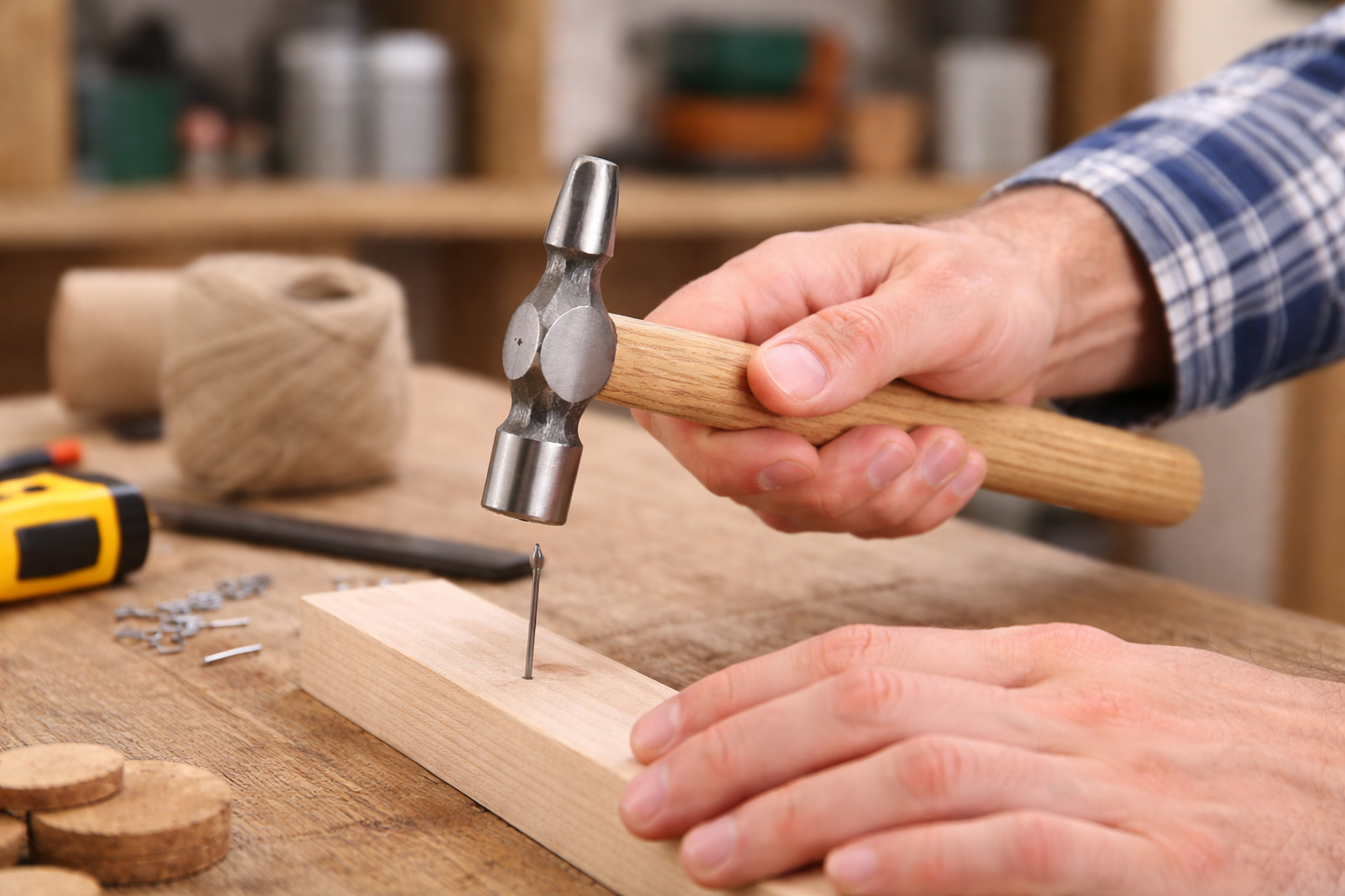
When you try to start a small pin by holding it between your fingers and hitting it directly with a flat face, your fingers are immediately next to the striking zone. Miss slightly — which happens — and you've hit your fingertips instead of the pin. The cross peen removes that risk entirely. You hold the pin in place, use the narrow peen face to tap it just enough that it stands upright in the timber on its own, then move your fingers clear and switch to the flat face to drive it home. Two taps with the peen, a few taps with the flat face, and the pin is set and driven without any of the fumbling.
That method is how woodworkers and joiners have started pins for as long as pin hammers have existed. Once you've done it a few times it becomes completely automatic, and you stop bending pins and bruising fingers almost entirely.
Wood Handles and Why They Still Make Sense Here
There's a reason experienced joiners haven't switched to fiberglass or steel-handled pin hammers even though those materials have been available for decades. For heavy hammers, synthetic handles deal with high-impact force better than wood. But pin work isn't heavy impact — it's light, repeated tapping, and wood handles that kind of use better than anything else.
The hardwood shaft has a small amount of natural flex in it. That flex softens each tap just slightly, which your hand feels as feedback. You can tell from the feel of the handle whether the pin is going in easily or meeting resistance. You can feel when you're about to overdrive it into thin timber before it actually happens. That information comes through a wooden handle in a way it simply doesn't through steel or fibreglass, and for work where splitting or marking the timber is the main thing you're trying to avoid, that feedback is the difference between a clean finish and a damaged one.
What It Actually Does Well
Drives panel pins without splitting the surrounding timber. Starts tacks safely without putting your fingers next to the striking face. Works with thin veneer and fragile mouldings where anything heavier would cause damage. Fits comfortably in the hand for long upholstery sessions or extended cabinet assembly without causing fatigue.
The drop forged head — shaped under pressure from solid steel rather than cast — holds its geometry through years of regular use. It doesn't chip at the face or deform at the peen the way cheaper heads eventually do.
At 325mm, the length is right for the type of work. Long enough to get a decent tap behind each strike, short enough to use in tight spots and to maintain the kind of precision that close joinery work requires.
Good for panel pin and tack driving, picture frame assembly, cabinet and furniture making, veneer and thin timber, upholstery, trim and moulding, beading work, and craft or model making — any job where you need a small hammer that you can feel properly through your hand.